Showing posts with label Art. Show all posts

Thursday, 17 December 2015

THE ART OF JE NE SAIS QUOI

Be sure to make note of Gemma Barron and Whitebox’s original soundtrack, mid-century modern style illustrations by Velwyn Vossy, abstract landscape created by set designer Fred Allsop, the 60s filtered lens style by Luke Palmer and the Beat poetry style throughout for all round culture points to match your new je ne sais quoi look. - See more at: http://www.wonderlandmagazine.com/2015/05/art-je-ne-sais-quoi/#sthash.cS2e1MT2.dpuf

"A Zebra takes its stripes wherever it goes"


CHOCHENG takes us on a French New Wave cinematic journey through femininity, etiquette and beauty in Western Culture. - See more at: http://www.wonderlandmagazine.com/2015/05/art-je-ne-sais-quoi/#sthash.BSOAGQOm.dpuf
CHOCHENG
CHOCHENG takes us on a French New Wave cinematic journey through femininity, etiquette and beauty in Western Culture. - See more at: http://www.wonderlandmagazine.com/2015/05/art-je-ne-sais-quoi/#sthash.BSOAGQOm.dpuf


Written and Directed by Corrine Delaney and 
Oliver Barron, 
‘The Art of Je Ne Sais Quoi’  
is inspired 
by French New Wave Cinema and style icons Jean Shrimpton and Anna Karina. 

Containing the telling art form of Beat poetry 
and accompanied by mid-century modern style illustrations by Velwyn Vossy,
 the film moves with a poetic visual and aural fluidity that can rarely be described as universal.


The film is an exploration of the golden ratio 
and the classic and modern ideals surrounding femininity, 
social etiquette and beauty in Western Culture.

The piece features costumes by CHOCHENG 
and an original soundtrack 
by Gemma Barron and Whitebox.

The film was shown in November 2015 
at ASFF (Aesthetica Short Film Festival),
a BAFTA Qualifying Film Festival, York UK.
All films in the Official Selection were in competition for: 
Best of Fest, People’s Choice and Best of Category awards
 In December 2015 at the Centre Pompidou, Paris
nominated for an award.

*
*
 
Short excerpt of an interview with CHOCHENG,
Corinne Delany and Oliver Barron:

Which Western norm/ideal do you think needs
to be eraticated surrounding femininity,
social etiquette and beauty?

Oliver Barron:
"For me it's excepting yourself no matter what anyone tells you.
It's about not following the crowd, not changing yourself for anyone else.

When writing the script we felt this was summed up 
by a South-African proverb, which ended up in the script:

'A Zebra takes its stripes wherever it goes'

This also seemed to match with the aesthetic of the film."
(whole interview here)

*
*

THE ART OF JE NE SAIS QUOI

Written and directed by Corinne Delany & Oliver Barron
Vocals: Gemma Barron
Editor: Oliver Barron
Costume design: CHOCHENG
*

ASFF 2015 is open for entries. We are looking for innovative filmmakers who challenge the short film genre and push the boundaries of this highly experimental art form. The festival is an excellent way to showcase new work and to connect with a wider audience. Alongside the opportunity to screen at ASFF, selected films will compete for Best Film in each category as well as the People’s Choice award. - See more at: http://www.asff.co.uk/aesthetica-short-film-festival-2015-prizes-and-networking-opportunities/#sthash.Lytmy4CZ.dpuf
This year at the Aesthetica Short Film Festival there is an outstanding line-up of fashion films, enabling audiences to stay on trend and explore how this relatively new genre is growing, developing and crossing filmic styles and stylistic boundaries - See more at: http://www.asff.co.uk/bafta-qualifying-asff-2015-fashion-film-strand-pinch-me-for-ted-baker/#sthash.1fkJnnAH.dpuf
 CHOCHENG
 Chocheng Char is a Fashion designer and entrepreneur
Born ChoJo Char Nuis Borjigit Chocheng in Hong Kong, he is from the Borjigin clan of Mongolia.
 Chocheng was raised by his grandmother, Betty Charnuis, a noted fashion designer in Hong Kong....
read more   here

*
*
*

The fifth edition of the BAFTA Qualifying Aesthetica Short Film Festival will take place from 5-8 November in York. A dynamic and essential player in the short film festival circuit, ASFF engages with viewers through a unique screening programme across the city’s historic and contemporary spaces. Each year, the festival invites international filmmakers to submit short film works in a wide variety of category, including advertising, animation, artists’ film, comedy, dance, documentary, drama, experimental, fashion, music video and thriller, is screened in venues such as cinemas, museums, galleries and medieval halls.
ASFF 2015 is open for entries. We are looking for innovative filmmakers who challenge the short film genre and push the boundaries of this highly experimental art form. The festival is an excellent way to showcase new work and to connect with a wider audience. Alongside the opportunity to screen at ASFF, selected films will compete for Best Film in each category as well as the People’s Choice award.
- See more at: http://www.asff.co.uk/aesthetica-short-film-festival-2015-prizes-and-networking-opportunities/#sthash.Lytmy4CZ.dpuf
Oliver Barron: My favourite element of the shoot was allowing our ideas to expand on the spot. The idea to film the ‘Audition’ scene was originally intended to be broken into different shots, but once we had rehearsed the choreography and the camera movements we felt we could shoot the entire scene in one take, which added a lot to that scene I think. - See more at: http://www.wonderlandmagazine.com/2015/05/art-je-ne-sais-quoi/#sthash.BSOAGQOm.dpuf

Monday, 3 October 2011

"By Invitation Only" - Chapter 2


'God is in the details'
meaning for me
that opportunities for discovery and creativity
come from digging into the details.


To keep it simple,
I like to say it with   Richard Feynman :


"...nearly everything is really interesting if you go into it deeply enough..."


and...


"...nature has a great simplicity and therefor a great beauty"


*


To create something that is beautiful,


Design and creation by our friend  Andre Dubreuil

elegant and unique,


 by  Isabelle de Borchgrave - Paper Illusions

...and refind,


or plain work,

every detail must be addressed with care.


So....


....'Goodness' of a final product is mostly established in the details.


"God is in the details"....   


 Isabelle de Borchgrave

....used by artists,


...craftsmen...

Chateau Puyguilhem, Périgord-Dordogne


and...


...architects over centuries.


St. Emilion, South-West France


Apart from Flaubert, the aphorism is associated  with the
German architect Ludwig Mies van der Rohe (1886-1969)
who also said:


"Less is more"

 
Barcelona Pavilion by Mies van der Rohe

The 'Barcelona' Chair and unique wall materials - 1928


*


To see a world in a grain of sand,


And a heaven in a wild flower,


Hold infinity in the palm of your hand,


And eternity in an hour.


*

"Whatever your hand finds to do, do it with all your might..."  King Solomon


because

 "no problem is too small or too trivial if we can really do something about it"
 Richard Feynman (1918-1988) 


Good luck!


We are all surrounded in our own environment by the beauty of nature and life,
 we only have to walk through the days with open eyes and mind
to discover, see and enjoy the details.


*****************


"Going into the details"...

Love to invite Karen from 'Pas grand-chose' to our monthly 'By invitation only'

because for her interesting blog with detailed...

 ...event reports... like the Decorative Antiques Fair, Battersea, London
here


...and...

...her lively traveling reportage's / adventures
here
 on the South coast in Dorset, England - just one of many.....

Please, kindly visit her blog!


*


Greetings to all fellow members of this blog event
and of course to all my blogger friends and readers.


Happy Tuesday to everybody!


Remark:
The Barcelona Pavilion, designed by Mies van der Rohe, 
was the German Pavilion for the 1929 International Exposition in Barcelona, Spain
The Pavilion was going to be bare - no trade exhibits - just the structure,
a single sculpture and purposed-designed furniture (the Barcelona Chair)....
read more   here


Uptade:

Don't miss!

Please see Ann's stunning post to our theme about the Spanish architect Antoni Gaudi
with his passion for details
here


Unique, wonderful....


and fabulous!

http://plumsiena.blogspot.com

and please

Don't miss this post from my invited blogger friend Karen
who also wrote a lovely post about our theme:


here

"a child's face in a market-place in Shanghai"
and here:
Pas grand-chose

Saturday, 10 September 2011

One of a kind....


Suzanne Valadon - The Mistress of Montmartre

 by Pierre-Auguste Renoir, 1885
Girl Braiding Her Hair


French artist Suzanne Valadon (1865-1938)
was an artist's model before becoming a respected painter herself.
Part of a circle of artists living and working in
Paris's Montmartre neighborhood at the turn of twentieth century,
Valadon was one of the most notable female artists of the period.
She is also remembered for her many love affairs
and as the mother of prominent French painter Maurice Utrillo.

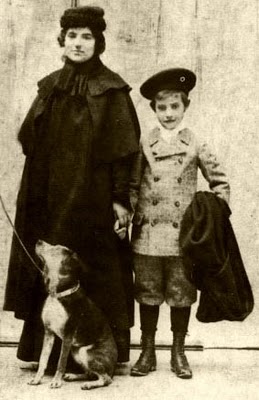
 Valadon and her son

*

Suzanne Valadon was born on September 23, 1865,
in the small town of Bessines, located in northeastern France.
Her mother, Madeleine Valadon, worked as a sewing maid;
the identity of her father was not known.
At the age of five, Valadon relocated to Paris with her mother.
She attended a convent school for a few years before
taking a job in a milliner's workshop at age 11.
Valadon also worked as a funeral wreath maker,
a vegetable seller, and a waitress while still a child.

Valadon with her mother

When she was a teenager, she befriended some artists
living in the Montmartre neighborhood of Paris, a bustling artist's community.
These artists helped Valadon get a job as an acrobat at the Mollier circus.
In March of 1880, she fell from a trapeze while practicing her act and injured her back.
After several weeks she essentially recovered, but remained unable
to perform in a circus for the remainder of her life due to the injury.
However, her brief stint with the circus remained one of her fondest memories.

After Valadon recovered from her back injury in 1880,
she cought the eye of painter Pierre Puvis de Chavannes.
This began her career as an artist's model.
For the next seven years she posed for several of Puvi's paintings
and was presumed to have been sexually involved with him.
the career of model was at that time a somewhat scandalous one,
the employers assumed the right to make love to their girls.
Valadon also worked as a model, from 1880 - 1883,
for several of the most important Impressionist painters of her day,
including Pierre-Auguste Renoir and Henri de Toulouse-Lautrec (who gave her paint lessons),
and is known to have had affairs with the latter two.

Portrait by Pierre-Auguste Renoir, 1885

City Dance 
Valadon and Eugene Pierre Lestringuez, by Renoir, 1883

Dance at Bougival with Paul Lhote
by Renoir, 1883


Portrait by Henri de Toulouse-Lautrec


Poudre de riz  -  1887, Henri de Toulouse-Lautrec

*
As an artist's model, Suzanne Valadon became an active member
of the artistic community of Montmartre
and became a regular at the famed tavern Lapin-Agile
as well as the early cabaret Le Chat Noir.


During this time in her life, Valadon made a name for herself
as a feisty, vivacious girl, known fur stunts such as sliding down the banister
at a popular club while wearing only a mask.

In 1881, age of 16, she began a relationship with Spaniard Miguel Utrillo y Morlius,
who owned the Auberge du Clou, a tavern frequented by the residents,
shop owners, workers, and artists of Montmartre.
On December 26, 1883, Valadon gave birth
on to an illegitimate son, named him Maurice Valadon.


Valadon herself seemed uncertain as to who the father of her child was;
but several other possible fathers have been suggested,
including Puvis, Renoir, and another young Paris artist named Boissy.
She gave her young son to her mother to raise, returning to work as a model.
Utrillo formally acknowledged the boy as his own in 1891
After being taught to paint and mentored by his mother,
as Maurice Utrillo, he became one of Montmartre's best-known artist.

*

During the mid- to late- 1880's, Valadon produced many drawings
and pastels of people and of street scenes.
Her artistic endeavors were assisted by Toulouse-Lautrec,
for whom she often modeled and with whom she had a lengthy affair
and went through the bars and taverns of Paris along with other fellow painters,
 he also painted her as the subject of The Hangover.

Valadon worked to hone her skills by observing the techniques
of the artists who painted her, becoming a fully self-taught artist over the years.

One of her best known works,
a pastel called Self-Portrait date from 1883


In the early 1890's she befriended Edgar Degas who,
impressed with her bold line drawings and fine paintings,
purchased her work and encouraged her efforts.
She remained one of Degas' closest friends until his death.


All of her early works were drawings executed in pencil or pastel.
In the early 1890's she commenced working oils, producing her first paintings.


One of the first oils, dating from 1893, was of composer Erik Satie.

Valadon and Satie had an intense six-month love affair in 1893.
A smitten Satie proposed marriage after their first night together but she turned him down.
For Satie, the intimacy of his relationship with Valadon 
would be the only one of its kind in his life, leaving him at its end, he said,
with "nothing but an icy loneliness that fills the head with emptiness and the heart with sadness."


 At that stage in her life, her love affairs seemed to pass over her like sunshine.

Portrait by Amadeo Modigliani


After the affair with Satie ended,
Valadon's involvement with Montmartre stockbroker Paul Mousis intensified,
and the pair married in 1896.  This marriage provided Valadon with financial stability,
enabling her to quit modeling and dedicate herself to drawing and painting full-time.
Valadon's unique style became more apparent once she had the freedom to practice
her craft unfettered by financial concerns.  Because Valadon was untrained,
she approached art with a different perspective than the other artists of her day.


Following her marriage to Mousis, Valadon left the city for a home in the country.
Here, she tried to balance her new duties as conventional wife with those of a working artist.
In the late 1890's Valadon produce less work of artistic value,
and made only a few sales, primarily to fellow artists.

Valadon's son, Maurice, did not adjust well to country life.
He completed primary school outside of Paris, but as a teenager attended school in Montmartre.
He did well with his studies, but began to develop a problem with alcohol.
Valadon turned her attention to her son's well being, neglecting her fledgling artistic career;
however, Maurice became progressively more unstable.
In the early 1900's, she began encouraging Maurice to paint as a means of therapy.
Maurice exhibited artistic talent, but his mental problems did not cease,
and in 1904 he was committed to a mental hospital for treatment of alcoholism and other problems.
Valadon continued his art lessons after his release a few months later.

Maurice Utrillo - Portrait of his mother


Portrait of son Maurice, her mother (his Grandmother) and his dog
by Suzanne Valadon, 1910

*

Valadon's relationship with husband Mousis was marred by problems nearly from the start.
In 1906 Valadon met a friend of her son's, Andre Utter, who was himself a young painter.
Utter was intrigued by Valadon, and three years later the two began an affair.
Valadon was by then 44 to Utter's 23.  
Prodded by Utter, Valadon returned more seriously to her art,
producing a significant number of paintings for the first time in years.
As the relationship between Valadon and Utter intensified, she at first tried to hide it from her husband.
However, she became careless and Mousis found out, breaking off the marriage.
He officially divorced Valadon in March of 1910.

Suzanne Valadon - Self-Portrait with her family, 1910

After the dissolution of her marriage, Valadon continued to paint in earnest,
as well as producing a lesser number of drawings and engravings.
In 1910 she painted her first landscape and her first nude self-portrait.
Despite these advances, Valadon was beginning to be overshadowed by 
her tumultuous artist son and his contemporaries, including Picasso.
Over the next few years, Valadon, her lover, and her son lived together
in the Montmartre on the proceeds of their artwork.
When World War I erupted in 1914, Utter volunteered for military service.
He and Valadon married so that she could receive an allowance from the military as a soldier's wife.


Utrillo, Valadon and Utter, 1919


1917 Utter received a bullet wound and Valadon traveled to the country to be closer to him.
She remained outside of Paris for some time, painting landscapes.
After the war ended in 1918, both Utter and Valadon returned to the city.
Utter marketed his works, as well as those of Valadon and Maurice Utrillo,
most successfully those of the latter.

Valadon, Utter and Utrillo


Maurice Utrillo


Maurice Utrillo

However, Valadon had reached her peak as an artist.
She produced paintings and drawings at a rapid pace,
and in 1920 was elected to the Salon d'Automne.
For the remainder of her career, Valadon would show frequently 
to critical acclaim but only moderate sales.
Her increasingly unstable son's artworks consistently overshadowed 
those of his mother commercially.


 Maurice Utrillo

*

In 1924 Valadon signed a contract with the art gallery Bernheim-Jeune,
enabling her to again live in financial comfort.  She purchased a country estate
called Saint-Bernard and spent much of her time there.
However, tensions among Valadon, Utter, and her son Utrillo continued,
fueled somewhat by Utrillo's continuing dominance professionally.
By the end of the 1920s, Utter had taken up drinking and womanizing.
Valadon continued to produce works, showing at a major retrospective in 1929.
Many works from this period depict her beloved pets.

Through the 1930s Valadon's health slowly declined.
In 1935 her son married and left his mother's home.
Utter had also moved out, although he and Valadon never divorced.
Her life continued to be filled with friends, visitors, and art despite the exodus of her family.

On April 7, 1938, Suzanne Valadon was painting at her easel
when she unexpectedly suffered a stroke.
She died at the hospital just hours later, at the age of 72,
and was interred in the Cimetiere de Saint-Quen in Paris.
Among those in attendance at her funeral were her friends and colleagues,
Andre Derain, Pablo Picasso, and Georges Braque.


 *


 Suzanne Valadon and one of her cats
by Marcel Leprin

 Raminou assis sur une draperie
by Suzanne Valadon, 1920

Suzanne Valadon painted still life, portraits, floral art, and landscapes
that are noted for their strong composition and vibrant colors.
She was, however, best known for her candid female nudes.
A perfectionist, she worked on some of her oil paintings for up to 13 years before showing them.

A free spirit, she wore a corsage of carrots,
kept a goat at her studio to "eat up her bad drawings",
and fed caviar (rather than meat) to her "good Catholic" cats on Fridays.

 Truly  'One of a kind'

*

Today, some of her works may be seen at the
Centre Georges Pompidou in Paris,
the Museum of Grenoble,
and the Metropolitan Museum of Art in New York.

*
A novel based on her life by Elaine Todd Koren was published in 2001,
entitled Suzanne: of Love and Art.
An earlier novel by Sarah Baylis, entitled Utrillos Mother,
was first published in England and later in the United States.
Timberlake Wertenbaker's play "The Line" (2009) traces the relationship between Valadon and Degas.

Book Reference: Rose, June (1999) Suzanne Valadon: the Mistress of Montmartre
New York: St. Martin's.  ISBN 0-312-19921-X